
Browse our collection of noir reviews and ratings.Showing 3 of 3 reviews.
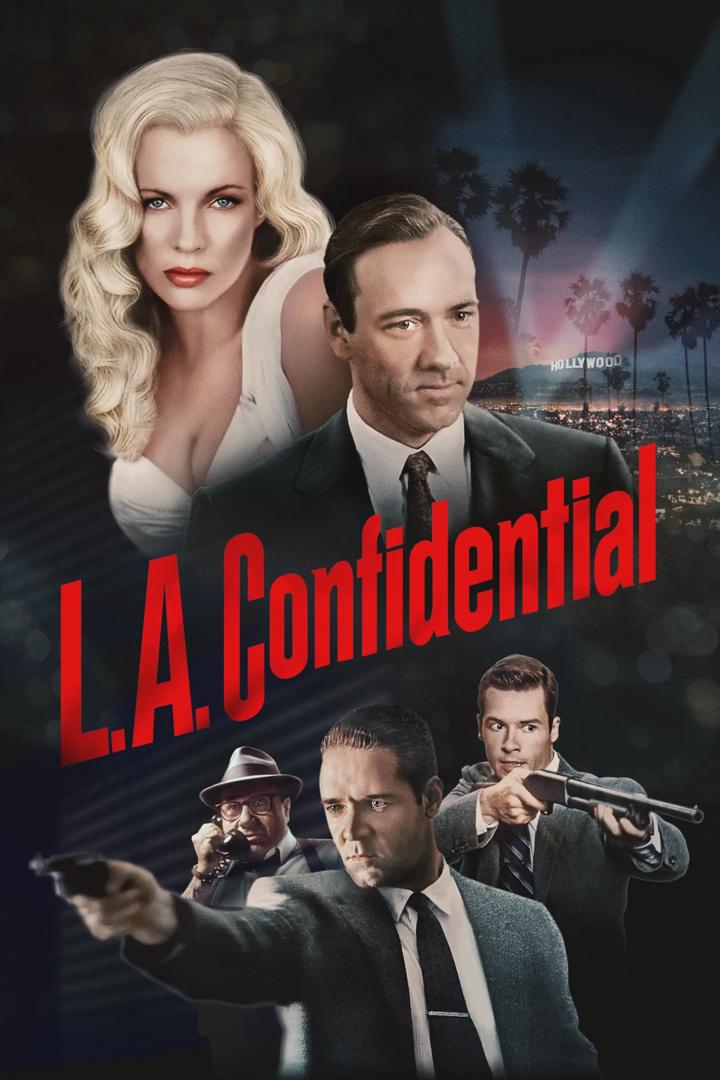
I keep coming back to L.A. Confidential and every time I do, I lose a little more faith in the bland crime flicks churned out today. This is a movie that understands two things: people aren’t always what they seem, and Los Angeles is never as shiny as the billboards tell you. The film sets up shop in the early 1950s, a city crawling with beautiful people and ugly secrets. You get a trio of cops working a brutal murder that cracks open the rotten core of Hollywood’s glamour, and trust me, the closer they get to the center, the more you realize everyone’s hands are dirty. Let’s talk about that cast. Russell Crowe and Guy Pearce—both still mostly under the radar when this came out—do the heavy lifting. Crowe’s Bud White is all brute-force and barely hidden pain, while Pearce’s Ed Exley is a stickler clinging to integrity in a world that’s allergic to it. Watching these two circle each other, sometimes brawling, sometimes reluctantly working together, is reason enough to watch. This movie also convinced me Kim Basinger could act, and I am not saying that lightly. She plays a Veronica Lake lookalike prostitute who manages to be soft, mysterious, and sad without ever feeling like a cliché. Visually, this movie is just cool. Director Curtis Hanson gives everything this slick, moody sheen. The camera lingers on stuff the way a tabloid would: red lipstick, glistening rain-slick streets, dead-eyed blondes in mirrored boudoirs. Everything feels slightly too glamorous but also deeply tired, like LA is shimmering through a hangover. The production design actually pays attention to midcentury detail—not just cars and fedoras, but wallpaper, neon signage, those uncomfortable office chairs. If I had to nitpick, the film does feel a little crowded. There are a ton of plot threads—corrupt cops, tabloid journalists, Hollywood scandals, all tangled together—and it feels almost a little too eager to show off all the underbelly it’s exposing. Sometimes the story takes a left turn and you blink, trying to remember how we ended up in this new alley. But most of the time, it somehow pulls the balancing act off. The pacing is deliberate. It isn’t slow, exactly, but it does take its time setting up its pieces, so if you’re the kind of person who needs non-stop momentum, be warned. There are stretches where the characters are just vibing in seedy bars or quietly interrogating each other over whiskey, and I love those moments, because if the movie had just been fistfights and shootouts, it would have felt like another disposable detective story. Here, every bit of violence feels personal, and every bit of downtime makes you a little more nervous about what’s crawling up next. What gives the movie real bite is the emotional weight—these aren’t cookie-cutter detectives gliding through. There’s a sense that every decision leaves a mark, and nobody makes it out clean. Watching Crowe’s White wrestle with his own brutality or Pearce’s Exley try not to compromise, the stakes actually feel human. Even Danny DeVito pops in as a greasy scandal writer, basically chewing up the film stock every time he opens his mouth. The ending still feels a little too eager to tie things up, which I guess is my one big gripe. For a movie steeped in ugliness and ambiguity, the wrap-up borders on pat, at least for me. I get why they went for it, but I would’ve preferred five minutes more ambiguity and five minutes less bow-tying. It doesn’t wreck what comes before, but it does keep the film from reaching true noir greatness. All told, L.A. Confidential nails so much. It doesn't just copy old noir movies, it updates them. There’s moral rot beneath the cigar smoke, and you feel it, right up until the last shot. If you want a movie that looks gorgeous, feels dangerous, and doesn’t stop to hold your hand, this is the one. Just don’t expect it to fix your low opinion of Los Angeles.
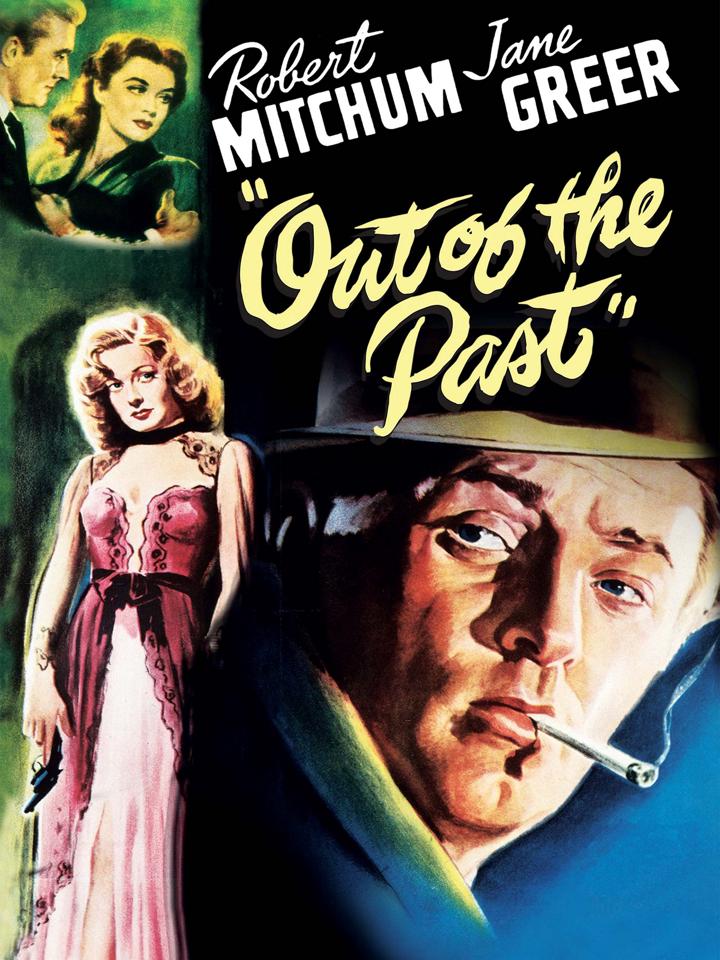
I know, I know — the original "Out of the Past" from 1947 is holy ground in noir circles. But I want to talk about its moody, synth-drenched 1984 remake, "Against All Odds", a film that flirts shamelessly with neo-noir and somehow bottles Los Angeles at its soft-focused sleaziest. It's not as iconic as its predecessor and, honestly, it's kind of uneven, but man, does it pack a curious punch if you're into smoggy city lights and morally messy characters. The plot is classic noir with a heavy eighties gloss: ex-football player Terry Brogan (Jeff Bridges, doing his best with the square-jawed tough guy thing) is hired by a slimy nightclub owner to track down his runaway lover, Jessie (Rachel Ward). Because this is noir, he finds her. Because it's eighties noir, sexual chemistry and shoulder pads come standard. The story doesn’t try to reinvent the wheel, and sometimes that’s all right — you can feel it wrestling with that old doomed-romance vibe, slow-burning through the tropics, neon-lit nights, and the inky backrooms of LA. I won’t sugarcoat it: the pacing is weird. You'll hit stretches of sun-faded romance that play like a music video (seriously, Phil Collins croons all over this) and then suddenly things get grittier. There’s a whiplash between the film’s meditative, almost lethargic vacation pace and the bursts of violent plot. Some people say "deliberate" to be polite, but for me, it mostly stalls the tension, especially in the first third. You wait for something snappy or thrilling to break through, and sometimes you get it — but just as often, you don’t. Cinematography is where "Against All Odds" really earns its keep. The tropical locations (hello, Cozumel!) are lush and pulse with druggy color, a clever twist on noir’s usual night-scape chokiness. When we’re back in LA, things tighten up; there’s a slick, shadowy look that feels expensive but not over-produced. I wish they’d trusted shadows more — after all, the best noir hides its secrets, not so much with palm trees, but with proper menace in the lighting. Still, certain scenes (like a foggy, desperate chase through a club) have gorgeous, painterly mood. What actually saves it for me is the acting. Jeff Bridges walks the line between wounded and stupid pretty well, and Rachel Ward looks impossibly beautiful even when she’s supposed to be world-weary, but it’s James Woods who just takes over whenever he appears. He plays the kind of slimeball only noir can really do justice to — all nervy, coked-out charm and sudden violence. He makes every scene tenser, even as the script soft-pedals his villainy. Truth be told, the script is kind of hokey, but in Woods’ hands, clichés feel a little sharper. The film tries hard to inject emotional weight, but it doesn’t quite nail the existential sadness the original managed with such ease. The romance is a little too glossy, the betrayals a little too telegraphed. You get some strong moments — like the much-talked-about confrontation on a club balcony, a rare spot where you can feel everyone’s desperation — but overall, it leans more into melodrama than heartbreak. Still, even failed attempts at depth are more fun to watch than empty flash, and there’s undeniable chemistry swirling through most of the scenes. Tonally, "Against All Odds" lives in a strange space. It wants to be brooding and fatalistic but sometimes gets seduced by its own eighties-ness, sliding from dark noir to steamy soap opera. There’s a fine line between homage and full parody, and the movie ghosts back and forth over it. The best moments are when it forgets about the formula and just lets the actors go at each other in smoky rooms or under poolside moonlight. Is it a great film-noir? No, not really. It’s more of a neon-dusted curiosity, something you’d stumble onto at midnight and then spend half the runtime squinting, thinking, "Have I seen this before?" The bones of noir are there, jutting out awkwardly beneath shoulder pads and pastel sunsets. It’s got a sticky, sad vibe that works in flashes, even if you suspect the filmmakers cared more about mood than getting your heart in your throat. But sometimes a movie is a vibe first and a noir second, and that’s certainly the case here.
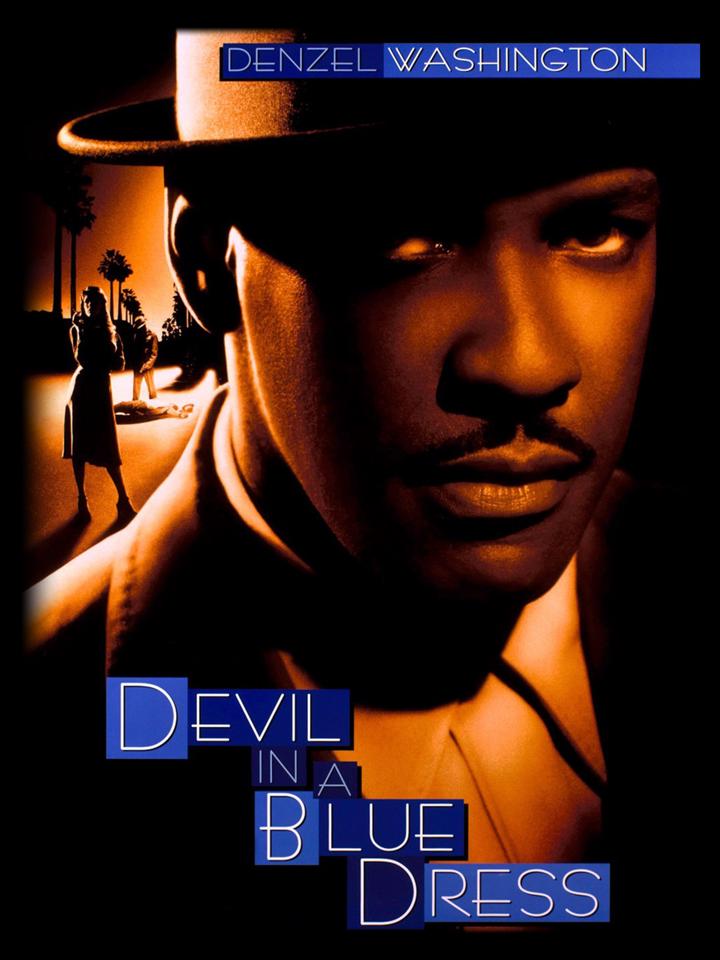
"Devil in a Blue Dress" is one of those slick, smoky neo-noirs that somehow always gets overlooked when people talk about the best entries in modern noir. Set in postwar Los Angeles, it’s anchored by Denzel Washington as Easy Rawlins, a World War II vet who’s down on his luck and gets lured into a missing person investigation that quickly spirals into something much darker. It really captures that anxious feeling of being pulled into a world you only half-understand. What stood out most for me was the atmosphere - you can practically feel the balmy LA nights and smell the cigarette smoke and whiskey in the air. The film nails the period with sharp costumes, jazz clubs, and shadowy, neon-lit streets. Cinematographer Tak Fujimoto gives it this saturated, stylish look without ever losing sight of the grit just beneath the polish. I loved all the little period details, right down to the cars and street signs. Denzel, as always, is magnetic, but the real scene-stealer is Don Cheadle as Mouse, Easy’s unpredictable friend. Every time he’s on screen, the energy changes - it’s no wonder this was one of those early roles that put Cheadle on the map. The supporting cast is really solid, adding to that sense of a real, lived-in world full of secrets and dangerous alliances. If there’s any weak spot, it’s that the plot gets a little convoluted in the middle. Some of the twists come fast and don’t always get enough explanation, so if you’re someone who likes everything neatly wrapped up, you might find yourself rewinding. But honestly, that messy feeling sort of adds to the noir vibe, where murky motivations are all part of the package. I’d definitely recommend this for fans of movies like "L.A. Confidential" or anyone who’s into character-driven thrillers with a heavy dose of atmosphere. It’s got class, suspense, and more heart than you’d expect. It deserves way more attention than it gets.